The United States is in the middle of one of the most significant overhauls of its international student visa system in decades. On 6 July 2026, multiple US federal departments — led by the Department of Homeland Security — released a unified regulatory agenda outlining sweeping changes to how F-1, J-1, and I visa holders are admitted, how long they can stay, and how they can work after graduation.
If you’re currently studying in the US, planning to apply, or working through Optional Practical Training (OPT), these changes could directly affect your timeline and options. Here’s a full breakdown.
The End of “Duration of Status” (D/S)
For decades, most international students in the US have been admitted under a system called “duration of status,” which essentially allowed them to remain in the country for as long as they maintained their student status — without a fixed expiration date tied to their visa.
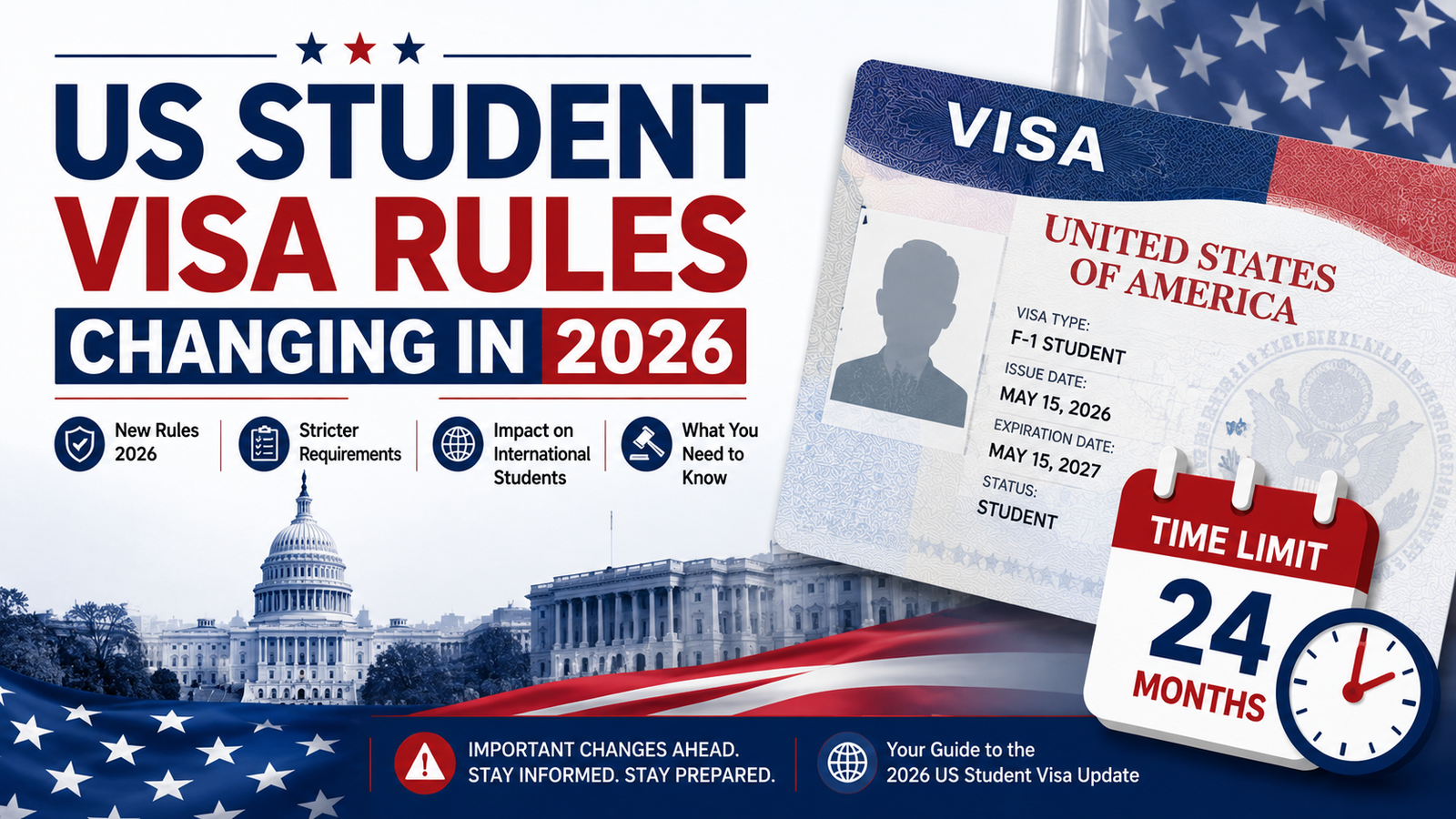
That’s changing. DHS submitted a final rule to end duration of status to the Office of Management and Budget for review on 5 May 2026, and that review was completed on 17 June 2026. The rule is expected to take effect 60 days after it’s published in the Federal Register, with most F-1 and J-1 visa holders being admitted for a maximum of four years — or the length of their academic program, whichever is shorter.
Here’s what that means in practice:
- Students needing more time than their initial admission period will have to file a formal extension request with US Citizenship and Immigration Services (USCIS) — a process previously handled directly by university international student offices (Designated School Officials).
- The rule is expected to apply to new students entering the US starting September 2026.
- Current students who need to extend their stay beyond their program end date will likely need to go through the same USCIS extension process.
- There may be a six-month grace period for OPT participants after the rule takes effect, provided they don’t leave the country during that window.
The government has framed this change as a way to address fraud and improve national security oversight by more closely monitoring international students’ activities and end dates. Critics — including the international education association NAFSA — have pushed back, arguing that the shift removes flexibility that has long supported smooth, uninterrupted academic progress for legitimate students.
What This Means for OPT
Optional Practical Training (OPT) allows international graduates to work in the US temporarily in a field related to their degree — and it’s a major reason many students choose to study in America in the first place. A 2025 survey by NAFSA and the Institute for Progress found that 54% of current international students said they would not have enrolled at a US university without access to OPT.
While the new regulatory agenda doesn’t finalize OPT-specific reforms just yet, DHS has confirmed it intends to publish proposed changes to practical training programs — including OPT, STEM OPT, and Curricular Practical Training (CPT) — around February 2027. The stated goals are to reduce fraud, protect US workers from being displaced, and give the Student and Exchange Visitor Program more oversight capacity.
To put the scale of this in perspective: of the roughly 1.18 million international students in the US in 2025, about 294,000 — nearly one in four — were participating in OPT. Any meaningful restriction to the program would affect a substantial share of the international student population.
H-1B Visa Reforms Are Coming Too
The regulatory agenda also confirms that DHS plans to move forward with previously announced reforms to the H-1B work visa program, with proposed rules expected in August 2026. According to the agenda, the changes will focus on:
- Revising eligibility criteria for H-1B cap exemptions
- Increasing scrutiny of employers with a history of violating program requirements
- Strengthening oversight of third-party placements of H-1B employees
The stated intent behind these changes is to improve program integrity and better protect the wages and working conditions of US workers. Separately, the Department of Labor has also proposed a rule that would raise required minimum salaries for H-1B and related visa categories by an estimated 21–33%, depending on experience level — a move that could make it significantly more expensive for US employers to sponsor international graduates.
Why This Matters Beyond the US
These changes don’t just affect students already in the US — they have ripple effects across the entire international education pipeline. Countries that supply large numbers of STEM graduates to US universities and tech employers, in particular, are watching closely, since the traditional “study → OPT → H-1B → potential green card” pathway is a major draw for prospective applicants worldwide.
What Prospective and Current Students Should Do Now
- Track your program length carefully. If your degree will take longer than four years, start planning for a USCIS extension request well in advance.
- Understand that OPT may look different by 2027. If your post-graduation plans rely heavily on practical training, stay updated on DHS’s February 2027 proposal.
- Budget for a more competitive H-1B environment. Rising minimum salary requirements could affect which employers are willing to sponsor visas going forward.
- Consult your school’s international student office regularly, since implementation details are still evolving.
Final Thoughts
The shift away from duration of status marks one of the most consequential changes to the US international student visa system in years. While the full impact of the accompanying OPT and H-1B reforms won’t be clear until their formal proposals are published, students currently in — or planning to enter — the US system should start preparing now for a more structured, deadline-driven visa process.
Stay connected with Savvy Bazar for ongoing coverage of US visa policy changes and what they mean for international students