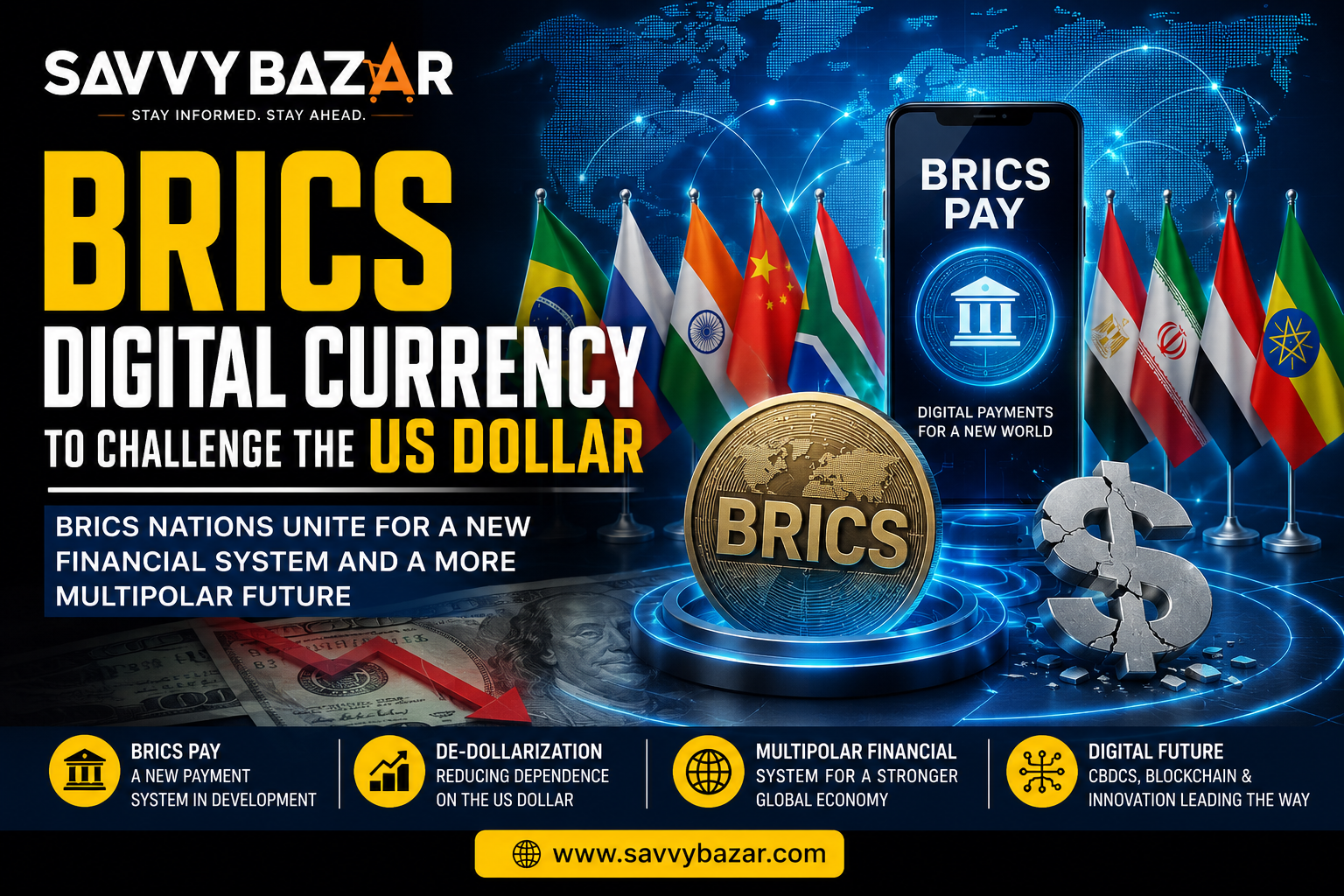
BRICS nations are developing a new digital payment and currency system aimed at reducing dependence on the US dollar. Here’s everything we know about BRICS Pay, de-dollarization, and the future of global trade.
The BRICS alliance is accelerating efforts to reshape the global financial system with a new digital payment and currency initiative designed to reduce dependence on the US dollar in international trade.
The development comes amid growing global discussions around “de-dollarization” — a movement where countries increasingly use local currencies and alternative payment systems instead of relying on the American dollar for trade settlements.
What Is BRICS?
BRICS originally consisted of Brazil, Russia, India, China, and South Africa. The bloc has expanded significantly in recent years, adding countries such as Egypt, Ethiopia, Iran, the United Arab Emirates, and Indonesia.
Together, BRICS nations represent a major share of the global economy and nearly half of the world’s population. The group has increasingly pushed for a “multipolar” financial order where global trade is not dominated by a single currency or Western-controlled financial institutions.
BRICS Pay: The Digital System Designed to Rival SWIFT
Instead of immediately launching one unified BRICS currency, the alliance is currently focused on building a digital payment infrastructure known as “BRICS Pay.”
BRICS Pay is being developed as an alternative payment messaging system that would allow member countries to conduct transactions using their own national currencies and central bank digital currencies (CBDCs).
The platform is expected to reduce dependence on the SWIFT network, the Western-controlled global payment system widely used for international banking transactions.
According to recent reports, India’s central bank has proposed linking the official digital currencies of BRICS countries to simplify cross-border trade, tourism payments, and financial settlements.
The proposal is expected to become a major topic at upcoming BRICS economic meetings and summits.
Why BRICS Wants to Reduce Dependence on the US Dollar
The push for de-dollarization intensified after Western sanctions on Russia and growing geopolitical tensions between major global powers.
Many BRICS nations believe the current financial system gives excessive power to the United States because the dollar dominates:
- Global trade settlements
- International reserves
- Oil transactions
- Banking systems
- Cross-border payments
By creating an independent financial infrastructure, BRICS countries aim to protect themselves from sanctions, reduce currency conversion costs, and increase financial sovereignty.
Russia and China have been among the strongest supporters of the initiative, while Brazil’s President Luiz Inácio Lula da Silva has repeatedly called for alternatives to dollar-based trade systems.
Is BRICS Creating a Single Currency?
Despite viral social media claims, BRICS has not officially launched a single common currency yet.
Instead, experts say the bloc is focusing on:
- Local currency trade
- CBDC interoperability
- Digital settlement systems
- Blockchain-based payment networks
Some proposals also include a possible “Unit” settlement mechanism backed partially by gold and BRICS member currencies.
However, analysts believe a fully unified BRICS currency remains a long-term and highly complex project due to political, economic, and regulatory differences among member countries.
Can BRICS Really Replace the US Dollar?
Economists remain divided.
Supporters argue that BRICS’ growing economic influence, energy trade partnerships, and digital payment innovation could gradually weaken the dollar’s dominance over time.
Critics point out that the US dollar still controls the majority of global reserves and international transactions. They also argue that trust, liquidity, and financial stability remain major advantages for the American currency.
Several experts believe BRICS Pay is more likely to complement the current financial system rather than completely replace the dollar in the near future.
Donald Trump Previously Warned BRICS
The BRICS de-dollarization agenda has also drawn sharp reactions from the United States.
US President Donald Trump previously warned BRICS nations against attempts to undermine the dollar and threatened heavy tariffs on countries pursuing anti-dollar financial systems.
The statements highlighted growing geopolitical tensions surrounding global trade, digital currencies, and economic influence.
What Happens Next?
The coming BRICS summits could determine how quickly the alliance moves toward a fully operational cross-border digital payment system.
Several member nations are already increasing trade settlements in local currencies, while central banks continue exploring CBDC integration and blockchain-based financial infrastructure.
Although a complete replacement of the US dollar appears unlikely in the immediate future, BRICS’ digital currency ambitions signal one of the most serious challenges yet to the current global financial order.
As global trade dynamics evolve, the rise of BRICS Pay and digital settlement systems may reshape how nations conduct business in the years ahead.